
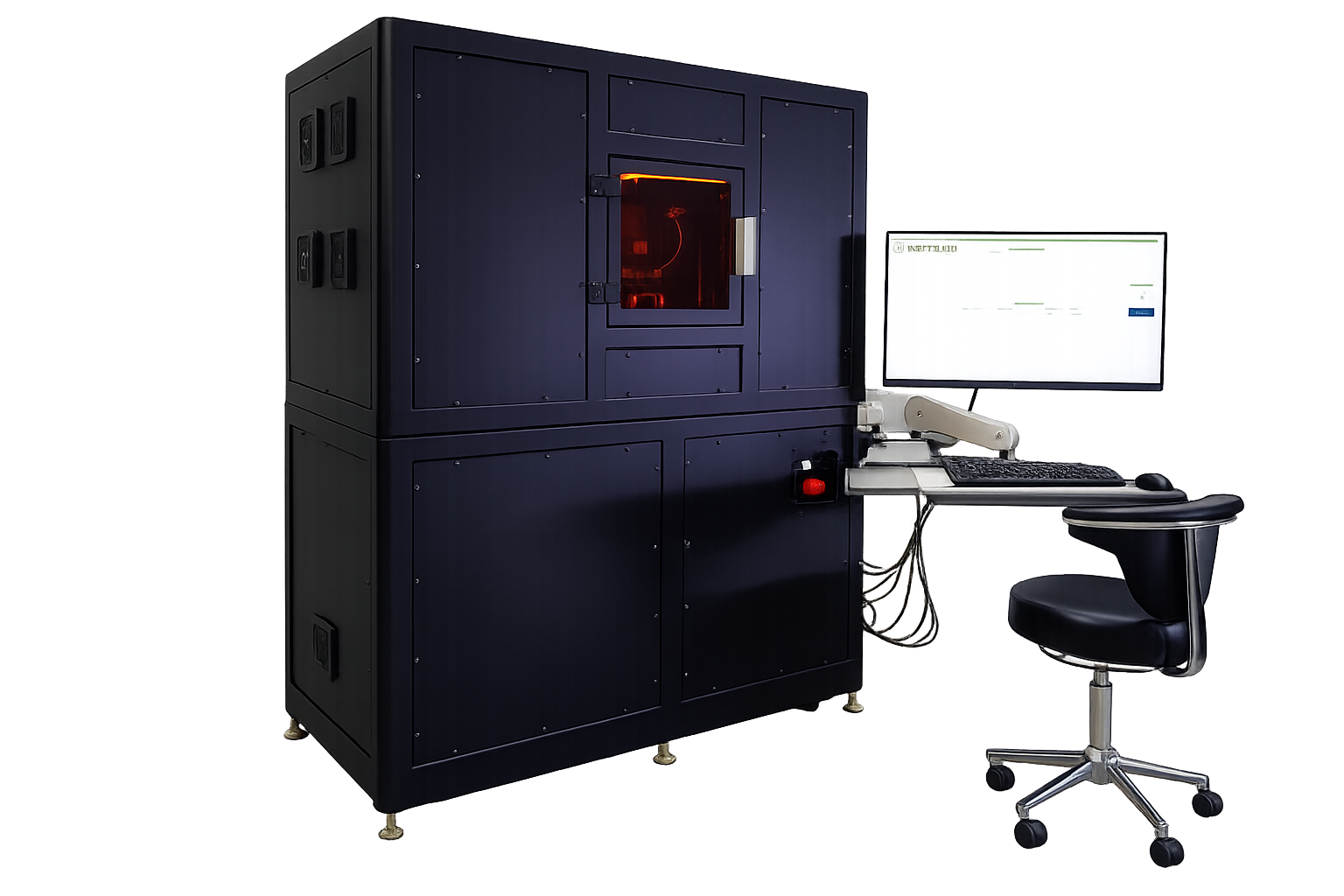
Manufacturing Customization
Scalable manufacturing solutions for customized intraocular lens optics, supporting advanced designs such as multifocal, EDOF, and toric profiles.
Scalable manufacturing solutions for customized intraocular lens optics, supporting advanced designs such as multifocal, EDOF, and toric profiles.
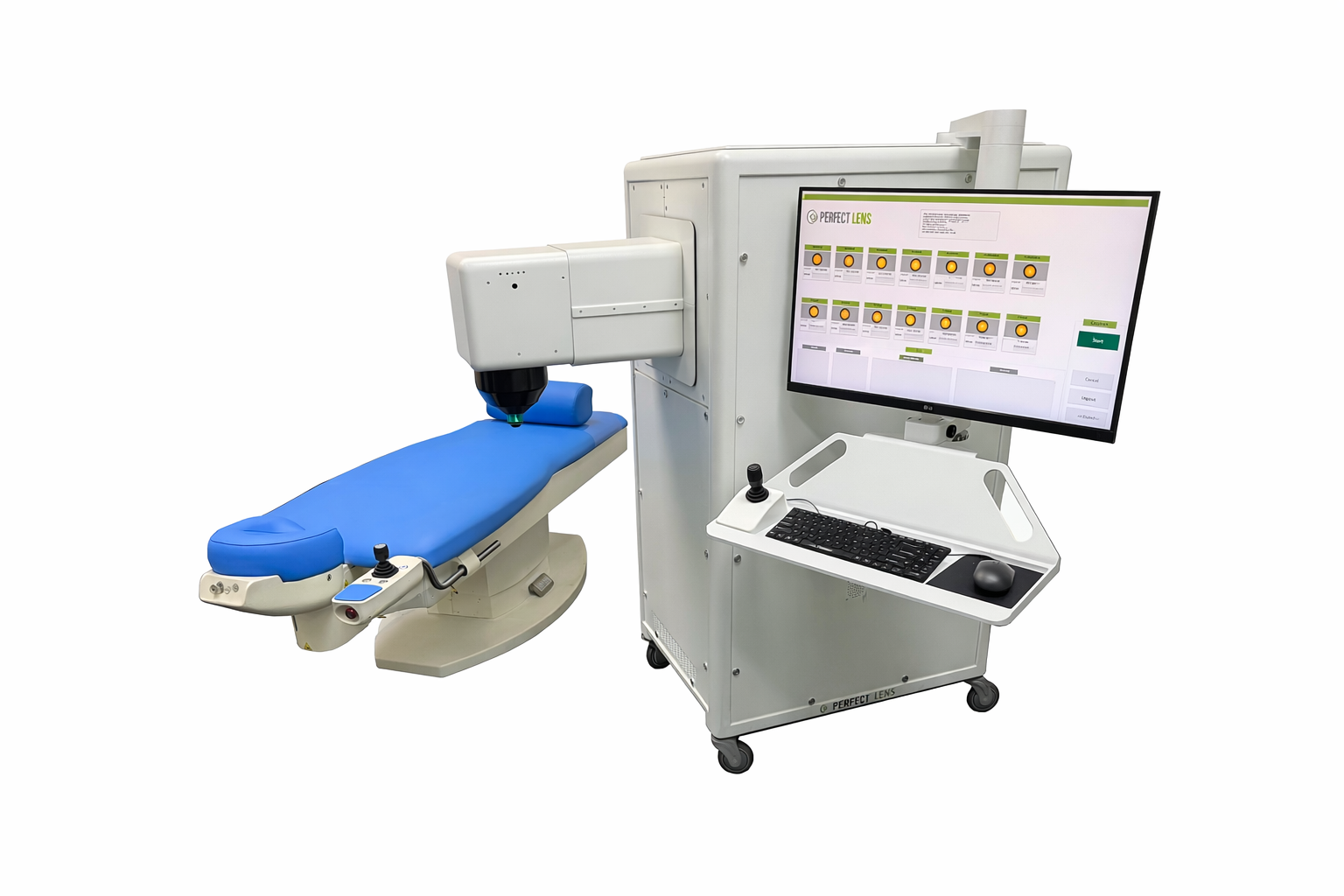
Investigational workflows designed to enable controlled refractive modification of implanted intraocular lenses without surgical lens exchange.
Note: In vivo technology is investigational and evaluated in research and clinical study settings.
Manufacturing customization represents a controlled environment in which the RIS process can be developed, validated, and refined with a high degree of repeatability. A key focus of the research program is diopter-level precision, which enables predictable refractive outcomes and supports the creation of advanced optical designs.
Conventional intraocular lens manufacturing relies on lathes and molds that require significant process expertise and long development cycles. Achieving premium designs such as multifocal, EDOF, or customized profiles typically depends on specialized know-how and tightly controlled manufacturing infrastructure, creating a substantial barrier to market entry.
The RIS manufacturing system is being developed to enable rapid prototyping and digital definition of optical designs, reducing reliance on fixed tooling and enabling a broader range of companies to explore differentiated, customer influenced optics. High diopter precision is central to this approach, supporting consistent optical performance and more predictable surgical outcomes.
Current ISO manufacturing tolerances allow for relatively wide diopter ranges within a labeled power, which can result in clinically meaningful variability. The manufacturing research program investigates how tighter refractive control can reduce variability and support more consistent refractive results across lenses of the same nominal power.
Manufacturing customization provides a controlled, repeatable environment to validate RIS performance and optical precision prior to clinical application.
The in vivo research pathway represents a novel and investigational application of the RIS process, enabling refractive modification after intraocular lens implantation. Unlike manufacturing systems, no existing clinical platform provided the precision, stability, or optical control required for this application.
Development of the in vivo system required rethinking every element of the workflow, including patient docking, alignment, focus determination, treatment planning, and laser delivery. Each subsystem was designed to meet precision requirements that exceed those of existing ophthalmic laser platforms.
The research effort did not rely on adapting an existing clinical laser system, but instead required the development of new concepts and validation strategies tailored to the unique optical and mechanical constraints of treating an implanted lens inside the eye.
Ongoing research focuses on understanding sources of variability, defining safe operating windows, and refining workflow robustness. The in vivo application is investigational and is being evaluated through structured research and clinical study programs.
The patient is docked to the system, alignment and focus are confirmed, and the laser treatment is delivered in a controlled, office based workflow.

Repeatability, precision, and stability under controlled laboratory conditions.

Material integrity, leachables, and ISO aligned evaluations.

Investigational preclinical and clinical studies.